

The Purpose and importance of the General Data Protection Regulation (GDPR)
The General Data Protection Regulation (GDPR) is a comprehensive data protection regulation that was introduced by the European Union (EU) in May 2018. The purpose of GDPR is to give individuals control over their personal data and to ensure that businesses handle personal data responsibly and transparently. GDPR applies to all businesses that collect or process personal data of individuals in the EU, regardless of the business’s location.
The importance of GDPR lies in its ability to protect the privacy and rights of individuals, as well as ensure the trust and confidence of customers in businesses. GDPR provides a framework for businesses to manage personal data in a responsible and ethical manner, and failure to comply with GDPR can result in significant penalties and reputational damage for businesses.
Overall, GDPR is essential for promoting transparency and accountability in the handling of personal data, and is an important step towards safeguarding the privacy and rights of individuals.
Why do Organisations Need to Comply with GDPR Regulations?
Businesses need to comply with GDPR regulations because failure to do so can result in significant legal, financial, and reputational consequences. Non-compliance with GDPR can lead to fines of up to 4% of a company’s global annual revenue or £17 million (whichever is greater).
Moreover, GDPR is not just a legal obligation, but a moral and ethical responsibility for businesses. GDPR emphasizes the importance of data privacy and security, and promotes transparency and accountability in the handling of personal data. Compliance with GDPR can help businesses build trust and confidence with their customers, leading to stronger relationships and increased loyalty.
Finally, compliance with GDPR is necessary for businesses that operate globally or have customers in the EU. The regulation applies to any business that processes personal data of individuals in the EU, regardless of the company’s location. Failure to comply with GDPR can lead to legal challenges and reputational damage, which can impact a business’s ability to operate in the EU market. Therefore, compliance with GDPR is not only important for legal compliance, but also for maintaining a positive reputation and building strong customer relationships.
How The Complete Guide to UK-GDPR Can Help Your Organisation with Compliance
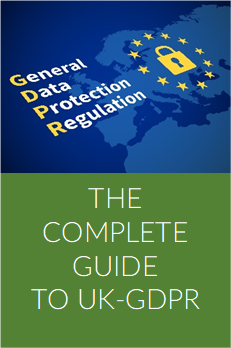
This guide delivers a Step-by-Step process to achieving compliance with GDPR with the focus on the UK-GDPR.
From the Introduction which gives the overview of what GDPR is about, on through the 24 steps; this guide, provides you with all the information you require to achieve GDPR Compliance.
It is structured around the advice recommended by the UK Supervisory Authority, the Information Commissioner’s Office (ICO) for GDPR Compliance and then because it is a PDF, includes hyperlinks to the relevant clauses in the GDPR documents and finishes with the recommendations delivered to multiple organisations by our Qualified GDPR Consultant to help them achieve GDPR compliance.
Following the steps in this guide, will enable you to complete your GDPR Gap Analysis and achieve GDPR Compliance without spending thousands on GDPR Consultants. Even if you do still want to use a consultant the guide will help with your understanding of what is involved in GDPR.
What’s Covered in the Guide?
| Step Description | Page |
|---|---|
| 1. Are you a Controller or a Processor | 8 |
| 2. What are the UK-GDPR key Principles | 10 |
| 3. What information do you hold | 18 |
| 4. The lawful bases of Processing | 21 |
| 5. What is Consent | 24 |
| 6. What people need to know about Vital Interest | 30 |
| 7. How do you use Legitimate Interest | 31 |
| 8. Register with the ICO | 37 |
| 9. Creating a Privacy Notice | 39 |
| 10. Processing Special Category Data | 42 |
| 11. Reviewing the Data Subject Rights | 44 |
| 12. UK-GDPR Accountability | 67 |
| 13. Creating Contracts with Processors | 72 |
| 14. Information Risks | 75 |
| 15. Data Protection by Design | 77 |
| 16. Staff Training and Awareness | 81 |
| 17. Use of Sub-Processors | 82 |
| 18. Operational Base | 83 |
| 19. Data Protection Impact Assessment (DPIA) | 84 |
| 20. Data Protection Officer | 87 |
| 21. Responsibility of the Management | 91 |
| 22. Security Policy | 92 |
| 23. Handling a Data Breach | 95 |
| 24. International Transfers of Data outside the EU / EEA | 98 |
Benefits of GDPR Compliance
Compliance with GDPR can bring several benefits to businesses, including:
- Improved data security: GDPR compliance requires businesses to implement data protection measures, such as encryption and access controls, to safeguard personal data. This can help businesses prevent data breaches and protect sensitive information from unauthorized access.
- Enhanced customer trust: By complying with GDPR, businesses demonstrate their commitment to data privacy and security, which can build trust with customers. This trust can lead to increased loyalty and positive word-of-mouth marketing.
- Competitive advantage: GDPR compliance can help businesses differentiate themselves from competitors by demonstrating their commitment to data privacy and security. This can be particularly important for businesses that operate in industries that handle sensitive information, such as healthcare or finance.
- Reduced risk of penalties and legal fees: Compliance with GDPR can help businesses avoid the significant fines and legal fees associated with non-compliance. By implementing GDPR-compliant practices, businesses can mitigate the risk of data breaches and protect themselves from legal and financial penalties.
- Better data management: GDPR compliance requires businesses to have a better understanding of the data they collect and process. This can help businesses optimize their data management practices, leading to improved efficiency and better decision-making.
Overall, compliance with GDPR can help businesses build trust with customers, reduce risk, and improve their data management practices. By complying with GDPR, businesses can position themselves for success in an increasingly data-driven economy.
Conclusion
In conclusion, GDPR compliance is essential for businesses that collect and process personal data, as it promotes transparency and accountability in the handling of personal information. Failure to comply with GDPR can lead to significant legal, financial, and reputational consequences for businesses.
We encourage all businesses to take action to ensure compliance with GDPR regulations. Our GDPR Guide eBook provides practical advice on how to comply with GDPR, including step-by-step guidance on implementing GDPR-compliant practices and maintaining compliance.
By complying with GDPR, businesses can benefit from improved data security, enhanced customer trust and loyalty, and a competitive advantage. Customers also benefit from GDPR compliance, as it ensures that their personal data is handled responsibly and transparently.
To purchase the GDPR Guide eBook, click on the link below. Don’t wait until it’s too late – ensure GDPR compliance for your business today!